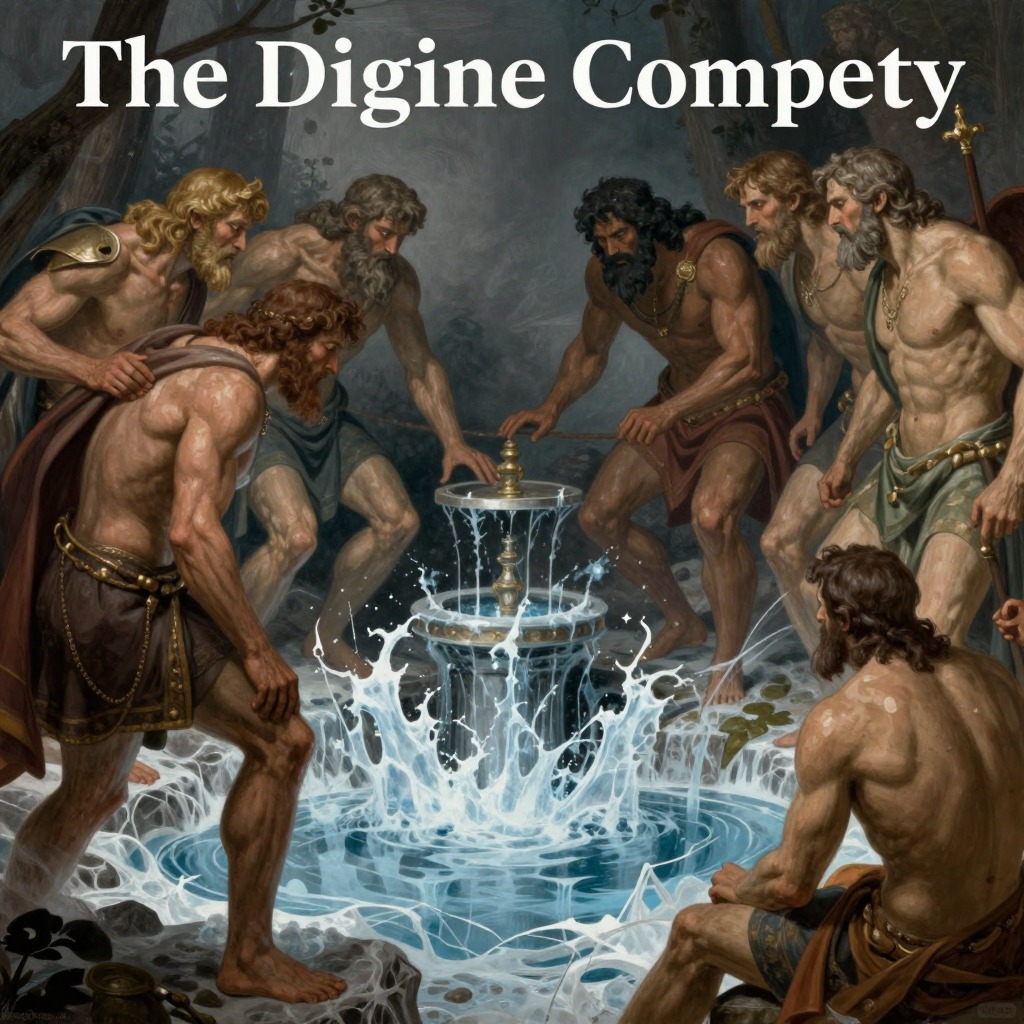
Giants
The Giants are a race of immense, mythological beings stationed in the deep well at the center of the Eighth Circle of Hell, where they serve as both a terrifying spectacle and a physical link between the upper realms of fraud and the frozen pit of Cocytus. Their presence marks a decisive shift in the geography of the Inferno, as the narrative moves from the intricate, ditch-like structure of Malebolge to the vast, open space of the Ninth Circle. Bound and partially submerged, the Giants embody the punishment of pride and rebellion against divine authority, their colossal forms a permanent monument to their failed insurrection.
Identity and Origin
The Giants are the offspring of Earth (Gaia) and the blood of Uranus, a race of primordial beings who waged war against the Olympian gods. In Dante's Hell, they are not merely mythological figures but historical and biblical entities, each with a distinct identity and a specific punishment. They are described as standing in the well, their bodies visible from the navel upward, their lower halves concealed within the darkness. The first Giant Dante encounters is Nimrod, the biblical hunter and builder of the Tower of Babel, whose "evil thought" caused the confusion of languages. Nimrod speaks only gibberish—"Raphael mai amech izabi almi"—a language unknown to any, a fitting punishment for his prideful attempt to reach heaven. The second is Ephialtes, one of the Aloadae who piled Mount Ossa and Mount Pelion on Olympus in an attempt to storm heaven. He is bound with chains, his arms pinioned, a punishment for his rebellion against Jove. The third is Antaeus, who is unbound and can speak, and who ultimately lowers Dante and Virgil into the Ninth Circle. Other Giants mentioned include Briareus, Tityus, and Typhoeus, though they are not directly encountered.
Appearance and Setting
The Giants are of such immense stature that they appear from a distance as towers. Virgil corrects Dante's initial impression that they are towers, explaining that they are Giants, standing in the well around the bank, from the navel downward. Their size is emphasized through vivid comparisons: Nimrod's face is as long and large as the pine-cone of Saint Peter's in Rome, and his body from the waist up is thirty great palms tall. Ephialtes is even more fierce and large, and when he shakes himself, the tremor is compared to an earthquake that could shake a tower. The setting is the circular well that forms the boundary between the Eighth and Ninth Circles, a dark, misty space where the Giants are "turreted" like the towers of Montereggione. The atmosphere is one of dread and awe, as the travelers approach these monstrous figures through a dim, foggy air that gradually reveals their true, terrifying forms.
Key Figures and Their Punishments
Each Giant's punishment reflects his specific transgression. Nimrod, the builder of Babel, is condemned to speak a language no one can understand, a direct consequence of his attempt to unify humanity against God. Ephialtes, who led the Giants in their assault on heaven, is bound with chains that hold him from the neck down, his arms pinioned, a symbol of his defeated ambition. Antaeus, who did not participate in the war against the gods, is unbound and can speak, and he is used as a tool by Virgil to descend into the final circle. The Giants are not tormented by fire or ice but by their own confinement and the futility of their power. They are a warning against the pride that seeks to overthrow divine order, their immense strength rendered useless by divine justice.
Narrative Role and Significance
The Giants serve as a crucial narrative and symbolic bridge in Dante's journey. They are the last inhabitants of the upper Hell, standing at the boundary between the circles of fraud and the frozen lake of Cocytus, where traitors are punished. Their presence marks a transition from the intricate, man-made structures of Malebolge to the stark, natural horror of the Ninth Circle. Virgil's interaction with Antaeus is particularly significant: he flatters the Giant, appealing to his fame and his role in the war against the gods, to secure his help in lowering them into the abyss. This act of manipulation underscores the theme of human reason (Virgil) using even the most monstrous forces to achieve a divine purpose. The Giants, as a group, represent the ultimate failure of brute strength and pride against the will of God, a lesson that resonates throughout the entire Commedia.